Define what you need to change
A cleanout and a deep clean can both be part of getting a property ready for its next use, but they describe different work. Start by listing the changes you need: unwanted furniture removed, surfaces cleaned, flooring replaced or a room repaired. Those are separate decisions even when they concern the same space.
The word clean can leave room for misunderstanding. A request to clear a living room might mean removing its contents, while another person expects a finished room ready to occupy. Describe the result you want before arranging the work.
A cleanout focuses on approved contents removal
For a contents cleanout, identify the furniture, boxes and household belongings approved to leave. Set the boundaries by room and item, and make clear which fixtures, appliances or belongings stay. A crew should be able to walk through that list with you before loading begins.
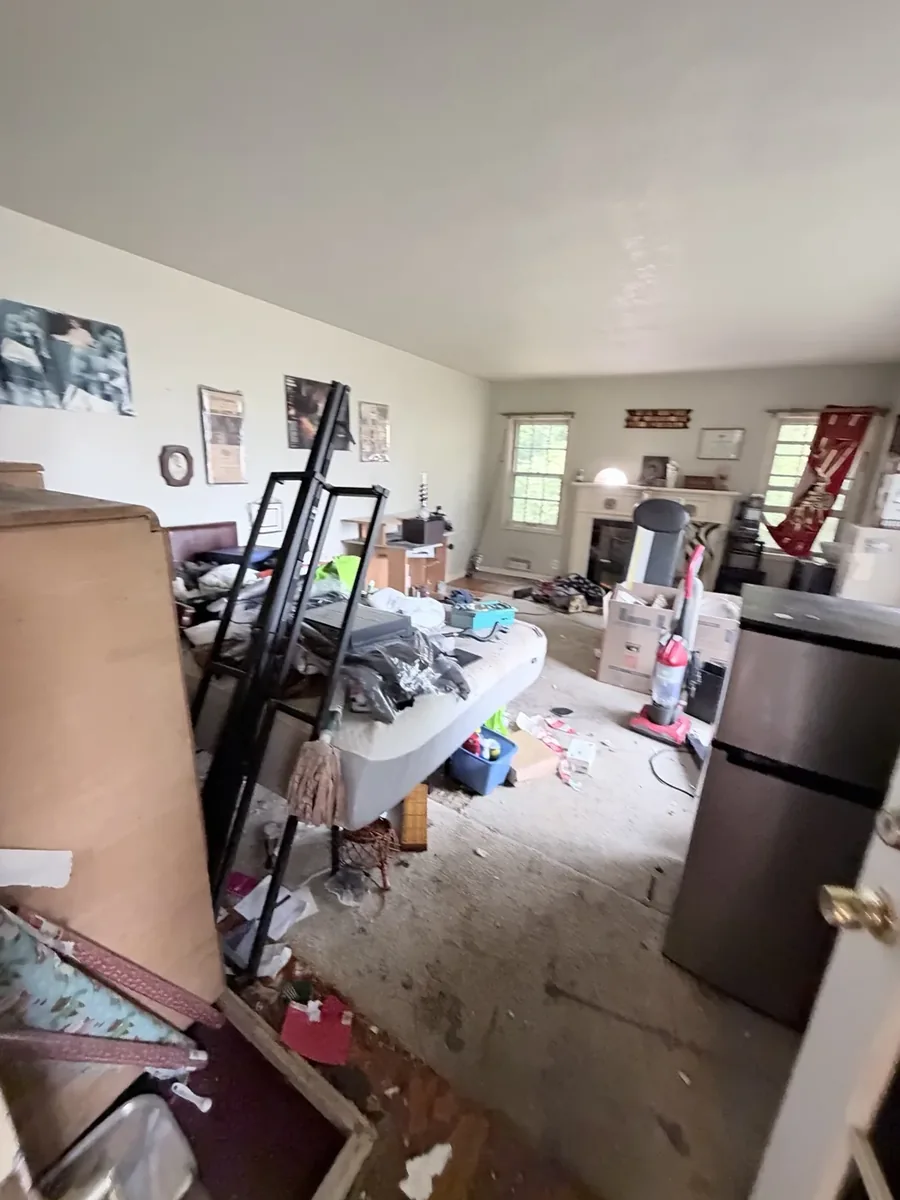
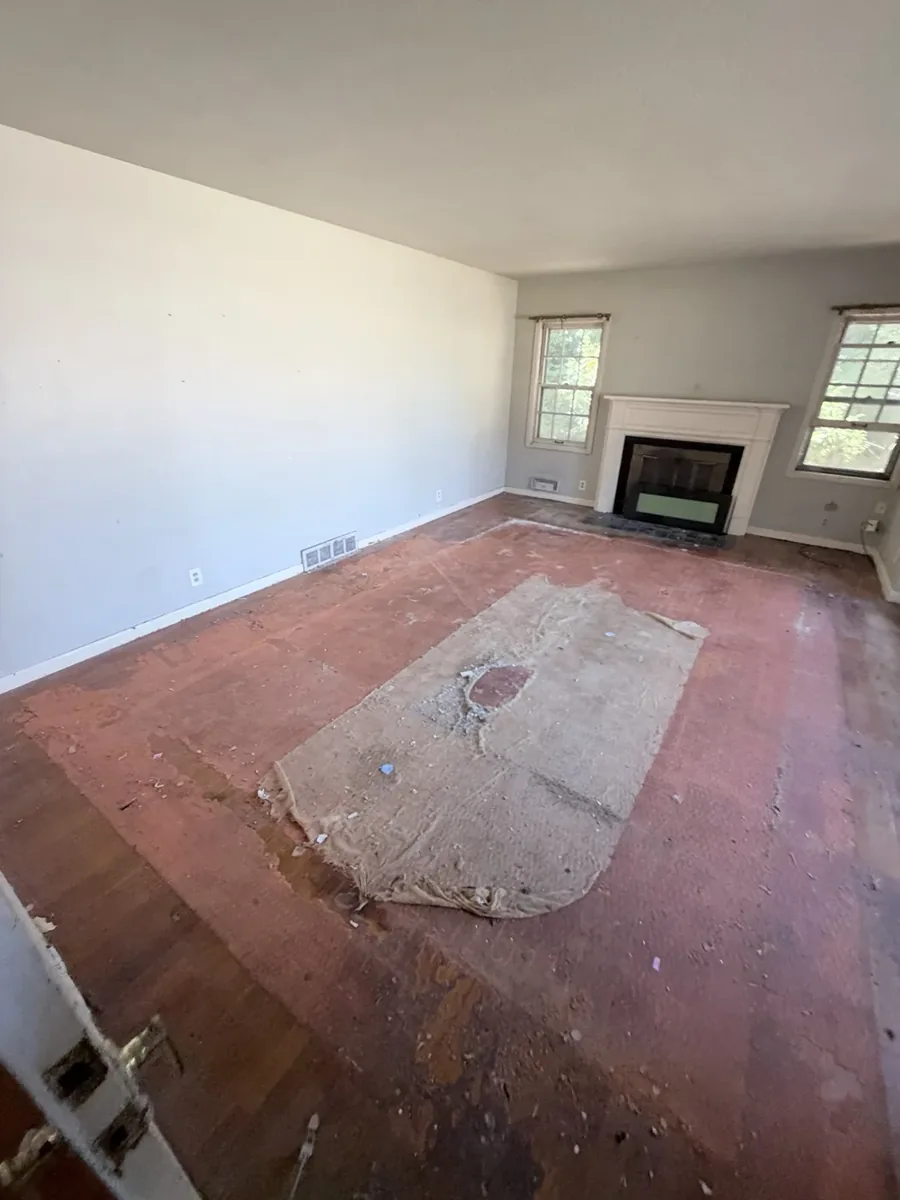
Our house project shows the same living room before and after furniture and household contents were removed. The floor is visible afterward, with exposed flooring and some carpet padding remaining. The photographs document that removal stage; they do not show a finished restoration.
Give cleaning and repairs their own scope
Deep cleaning concerns the condition of the surfaces and spaces that remain. Repairs and flooring work concern the property itself. Arrange those tasks separately and confirm what each provider is responsible for. Removing furniture does not by itself establish that the room has been deep cleaned, repaired or made ready for its next occupant.
If your project includes carpet, built-in materials or other work beyond loose household contents, describe it explicitly for review. Avoid assuming that a broad house-cleanout request includes taking apart fixtures or completing another trade's work.
- Removal brief: the approved contents and included areas.
- Cleaning brief: the surfaces and cleaning tasks to be reviewed.
- Repair brief: the property work requiring a separate arrangement.
Plan the handoff between stages
Contents removal may make a work area easier for another provider to inspect, but the right sequence depends on your project. Tell each contact what happens before and after their visit. Confirm access, who will be present and which areas must remain available for other work.
Share the date you are working toward without treating it as a confirmed completion promise. A larger cleanout may require its own work schedule after the estimate. Coordinate the next appointment once the removal scope and timing are clear, especially when several people need access to the same property.
Review the result against the agreed brief
At the end of the removal stage, compare the cleared areas with the approved item list. Check that keep items remain and the agreed contents have been removed. Identify any change in scope with the crew rather than judging the result against an unspoken expectation.
Keep a separate list for the next stage. Remaining flooring, surface marks or repair needs should be discussed with the provider responsible for that work. A clear handoff helps everyone understand what has been completed and what still needs an arrangement.
Bring the removal plan to the network
PNW Cleanouts showcases real JunkPDX work and connects to PNW Junk Removal for estimates and booking. Share the removal areas, approved contents, keep items and access through the network. Confirm the onsite scope and total before loading, and keep cleaning and repair arrangements clear alongside it.
YOUR NEXT STEP
Make a plan for your space.
Check your pickup address and arrange your free onsite estimate through PNW Junk Removal. Current local removal is through JunkPDX in Portland metro, Vancouver, Washington, and south to Woodburn.
Arrange a cleanout through PNWThe onsite scope and total are approved before loading. Larger cleanouts may need a separate work plan.